Ai Music Score Generator
Create custom music compositions tailored to your genre, instrument, and duration
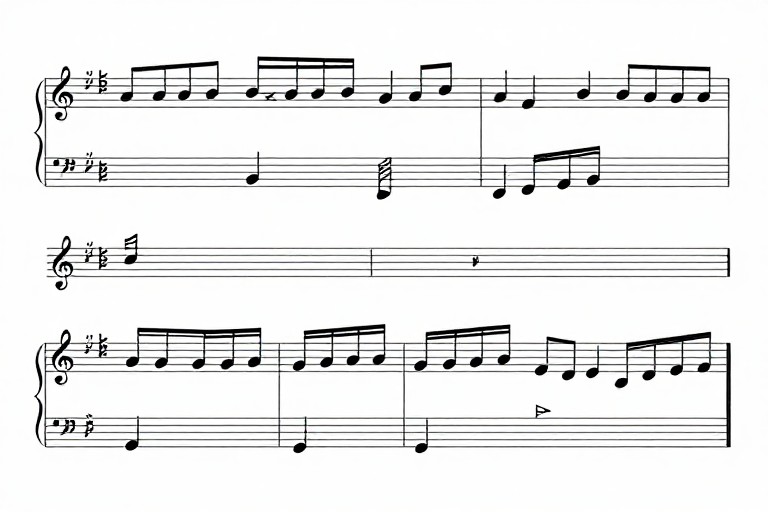
Ai Music Score Generator Examples
See what others have created
How to Get Started
Simple steps to create amazing results
Describe Your Musical Vision
Enter your preferences including genre, instruments, tempo, and mood. Our AI understands natural language so you can describe exactly what you're looking for.
Customize Settings
Fine-tune your music score by adjusting duration, key signature, time signature, and complexity. Preview different variations until you find the perfect match.
Download & Use
Download your AI-generated music score in multiple formats including PDF, MIDI, and MusicXML. Use it immediately in your projects with full commercial rights.
Main Features
Powerful capabilities at your fingertips
AI-Powered Composition
Advanced algorithms analyze your preferences and generate professional music scores that match your specified genre, instrument, and style with remarkable accuracy.
Multi-Format Export
Download your scores in various formats including PDF for printing, MIDI for digital audio workstations, and MusicXML for compatibility with all major notation software.
Instant Customization
Easily modify tempo, key, instruments, and arrangement. Make real-time adjustments and see your changes reflected immediately in the score.
Professional Quality Output
Generate publication-ready sheet music with proper notation, dynamics, articulations, and formatting that meets industry standards.
Unlimited Variations
Create unlimited versions and iterations of your music. Experiment freely with different styles and arrangements without any restrictions.
Lightning Fast Generation
Get your complete music score in seconds, not hours. Our powerful AI processes your requirements and delivers professional results instantly.
Frequently Asked Questions
Everything you need to know
Ready to Get Started?
Join thousands of musicians, composers, and creators who are bringing their musical ideas to life with AI-powered score generation.