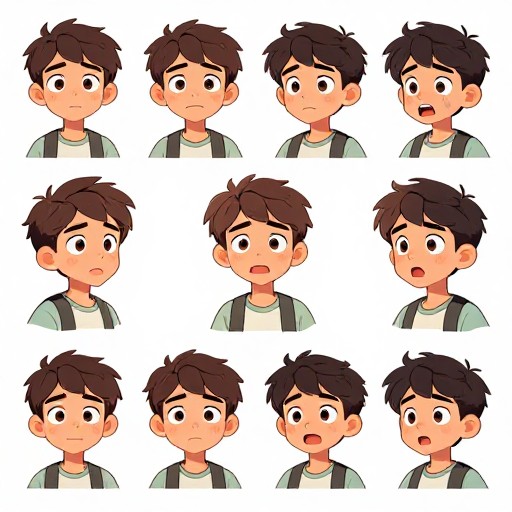
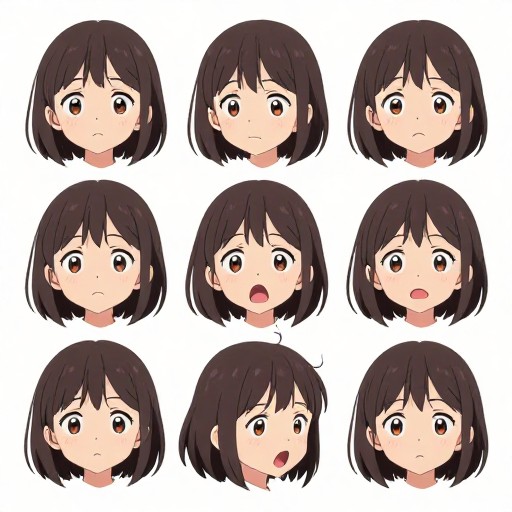
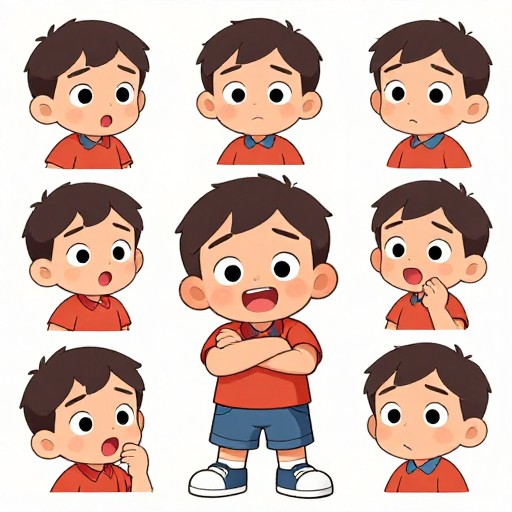
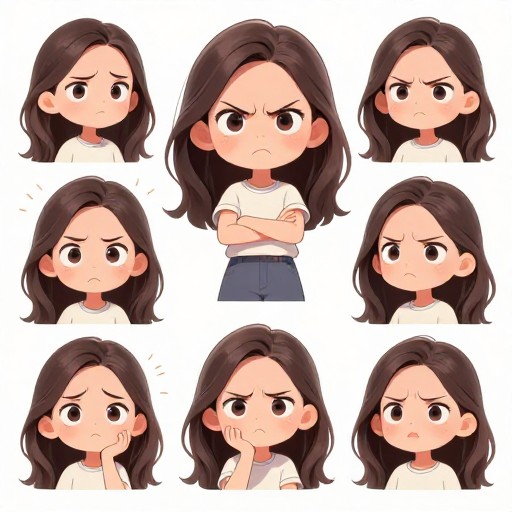
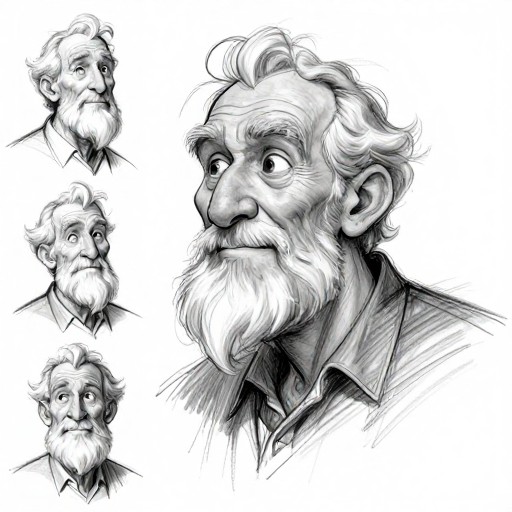
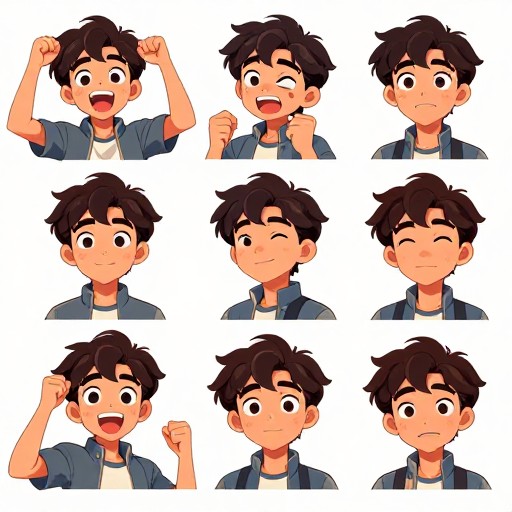
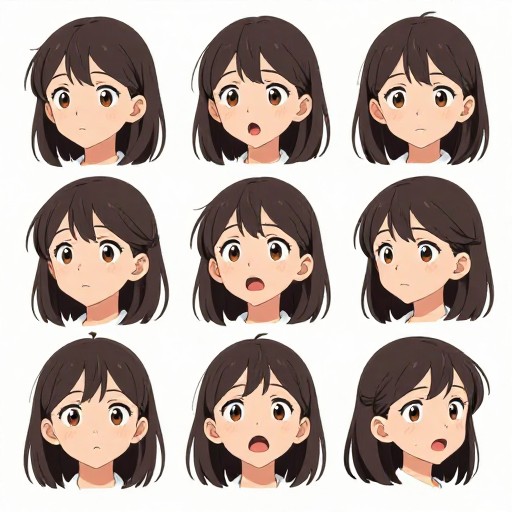
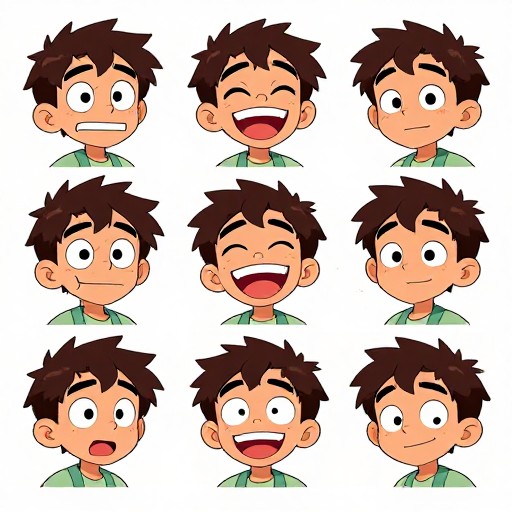
Create comprehensive expression sheets capturing your character's emotions and reactions across various scenarios

See what others have created
Simple steps to create amazing results
Input your character's details, physical features, and personality traits to create a unique foundation for your expression sheet.
Choose from a wide range of emotions and reactions, or let our AI suggest expressions that match your character's personality and use case.
Click generate to create your professional expression sheet instantly, then download it in your preferred format for immediate use.
Powerful capabilities at your fingertips
Maintain perfect consistency across all expressions with unified art style, proportions, and details that match your character perfectly.
Generate authentic emotional expressions ranging from joy and excitement to anger and sadness, all tailored to your character's personality.
Choose from various cartoon styles including anime, western animation, comic book, and chibi to match your project's aesthetic.
Download high-resolution expression sheets in multiple formats, perfectly organized and ready for animation, comics, or game development.
Create as many expression sheets as you need with unlimited generations, perfect for building comprehensive character libraries.
Get professional-quality expression sheets in seconds, saving hours of manual drawing time while maintaining artistic quality.
The modern expression sheet was standardized by Disney Studios in 1934 for the production of Snow White, requiring animators to draw each of the Seven Dwarfs with exactly 15 standard expressions to maintain consistency across 750,000 individual drawings.
Professional animation studios typically include between 12-24 expressions per character sheet, with 16 being considered the optimal number to cover the full emotional range without overwhelming the animation team.
Animation legend Preston Blair's 1947 expression sheets for MGM's Red Hot Riding Hood became so influential that they're still used as teaching templates in animation schools worldwide, 75+ years later.
To reduce costs in the 1960s, Hanna-Barbera developed 'limited expression sheets' with only 6-8 key faces per character, cutting animation production time by 40% but creating the distinctive 'limited animation' style that defined Saturday morning cartoons.
Japanese animation studios uniquely separate expression sheets into three categories: 'kihon hyōjō' (basic 8 expressions), 'tokubetsu hyōjō' (special 12-16 expressions), and 'SD hyōjō' (super-deformed comical versions), totaling 30+ variations per character.
Pixar's 3D expression sheets for Toy Story in 1995 required programming 58 individual facial controls for Woody alone, replacing traditional 2D drawings with 'blend shape libraries' that became the new industry standard.
Legendary animator Chuck Jones created over 100 different expression variations for Wile E. Coyote throughout the 1950s-60s, though official model sheets only showed 20, because he believed the character's suffering required nuanced emotional detail.
Since the 1920s, animation studios have required mirrors at every animator's desk specifically for creating expression sheets, with Disney mandating in 1937 that animators spend at least 30 minutes per week drawing their own faces for reference.
Osamu Tezuka, creator of Astro Boy, developed a standardized 'emotion symbol library' in 1952 featuring 27 graphic shorthand symbols (like sweat drops and vein marks) that became permanent fixtures on expression sheets across all manga and anime.
The Warner Bros. Animation Research Library contains over 65,000 original character expression sheets dating back to 1930, making it the world's largest collection, with Bugs Bunny alone accounting for 1,200+ different expression drawings.
Professional expression sheets traditionally show 75% of faces in three-quarter view rather than straight-on because this angle reveals both facial structure and emotion more clearly, a standard established by Fleischer Studios in 1933.
SpongeBob SquarePants holds the record for most official expression variations of any single character with over 200 documented faces across its master model sheets, necessary because his malleable square shape allows for extreme distortions impossible with human characters.
Everything you need to know
Create professional expression sheets for your characters in seconds. Bring your cartoon characters to life with authentic emotions and expressions.