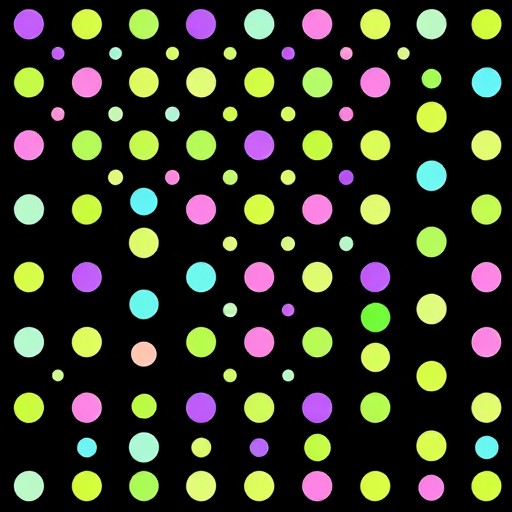
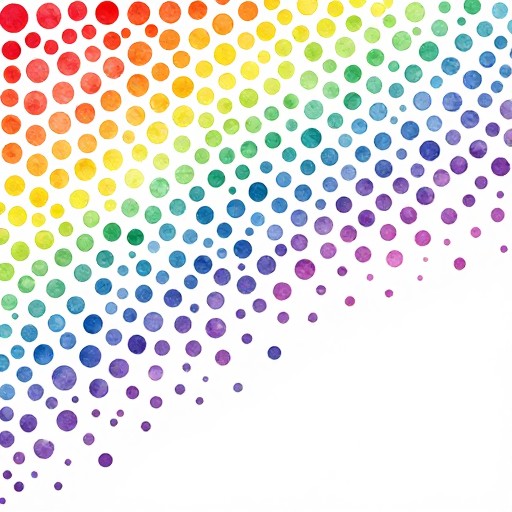
Create custom dot patterns with personalized colors, sizes, and styles for backgrounds and designs

See what others have created
Simple steps to create amazing results
Select from polka dots, random dots, or other dot pattern styles that match your design needs.
Adjust dot size, spacing, colors, and background to create the perfect pattern for your project.
Generate your pattern instantly and download it in high quality for use in your designs, websites, or prints.
Powerful capabilities at your fingertips
Choose any color combination for your dots and background. Create patterns that perfectly match your brand or design aesthetic.
Control the size and spacing of dots to create subtle textures or bold statement patterns that suit your vision.
Generate polka dots, random scatter patterns, grid layouts, and more with customizable density and distribution.
Download your patterns in crisp, high-resolution formats ready for both digital and print applications.
Australian Aboriginal dot painting dates back over 40,000 years, making it one of the oldest continuous art traditions in human history, originally created using ochre and natural pigments on rock and bark.
Georges Seurat developed Pointillism in 1886, spending over two years creating 'A Sunday Afternoon on the Island of La Grande Jatte' using approximately 3.5 million dots of pure color to achieve optical color mixing.
Invented by illustrator Benjamin Henry Day Jr. in 1879, Benday dots enabled mass printing of shaded images using dots of just four colors (cyan, magenta, yellow, and black), revolutionizing newspaper and comic book production.
Japanese artist Yayoi Kusama has created dot-covered installations since the 1960s, covering entire rooms with over 100,000 polka dots in single pieces as a way to visualize her hallucinatory experiences and achieve 'self-obliteration.'
Traditional halftone printing uses dot screens at precisely 45-degree angles to minimize visible patterns, with typical newspapers using 85 dots per inch while high-quality magazines employ 150-300 dots per inch.
Modern Aboriginal dot painting emerged in 1971 in Papunya, Australia, when artists deliberately used dots to conceal sacred ceremonial designs from outsiders while still preserving their cultural stories.
Pop artist Roy Lichtenstein hand-painted enlarged Benday dots using custom-made metal screens and stencils in the 1960s, with some individual dots in his paintings measuring up to 2 inches in diameter.
Pointillist paintings require viewers to stand 10-15 feet away for dots to optically blend into perceived solid colors; closer viewing reveals the technique, while farther distances create the intended luminous effect.
In Japan, polka dots (mizutama, meaning 'water dots') became a cultural phenomenon in the 1960s-70s, with the pattern representing cuteness and femininity, appearing on over 60% of kawaii fashion items by 1975.
The spotted patterns on leopards and ladybugs follow mathematical Turing patterns, discovered by Alan Turing in 1952, demonstrating that dot distributions in nature often follow predictable reaction-diffusion equations.
Modern screen printing can achieve dot patterns with mesh counts up to 400 threads per inch, allowing artists to create gradient effects using as many as 20 different dot sizes within a single square inch.
Contemporary dot mandala artists can spend 300-500 hours creating intricate pieces containing over 1 million individual hand-painted dots, with some works requiring magnifying glasses to apply dots as small as 0.5mm in diameter.
Everything you need to know
Create beautiful custom dot patterns in seconds. No design experience needed.