Create intricate metallic patterns for wallpapers, fabric designs, and digital art with custom color schemes
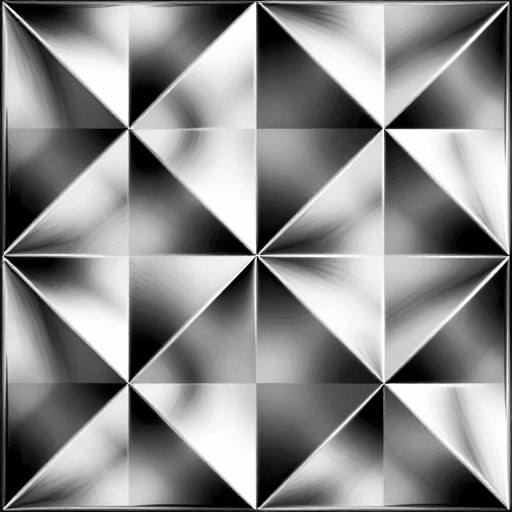
See what others have created
Simple steps to create amazing results
Enter your desired metallic pattern style - choose from geometric, floral, abstract, or industrial designs. Specify the mood and aesthetic you're looking for.
Select your preferred metal finish (gold, silver, bronze, copper), color scheme, pattern complexity, and output dimensions to match your project needs.
Generate your unique metallic pattern instantly and download it in high resolution. Use it for wallpapers, fabric designs, digital art, or product packaging.
Powerful capabilities at your fingertips
Choose from gold, silver, bronze, copper, or create custom metallic color combinations to perfectly match your design vision.
Advanced algorithms create unique, seamless metallic patterns with realistic textures and reflective surfaces in seconds.
Generate as many patterns as you need with no restrictions. Experiment with different styles until you find the perfect match.
Download your patterns in crisp, print-ready quality suitable for both digital and physical applications.
Damascus steel patterns, created as early as 300 BCE, contained distinctive wavy patterns formed by forge-welding different grades of steel together, with some blades showing over 50 visible layers in their surface patterns.
Mokume-gane, meaning 'wood-grain metal,' was developed in 17th century Japan by master metalsmith Denbei Shoami around 1614, originally used to decorate samurai sword fittings by fusing multiple layers of contrasting metals.
During the 1920s-1930s Art Deco period, metallic patterns featuring geometric chevrons and sunburst designs covered an estimated 80% of luxury building lobbies in major cities like New York and Paris.
Guilloché engraving, perfected in the 1700s, creates intricate geometric metallic patterns using a rose engine lathe and is still used today on Swiss watches and currency, with some patterns containing over 1,000 precisely cut lines per square inch.
Medieval Islamic metalworkers in 12th century Persia created brass vessels with damascene patterns containing up to 16-fold geometric symmetry, predating modern mathematical understanding of such complex tessellations by 800 years.
Ancient Celtic metalsmiths created continuous interlaced patterns on bronze and gold artifacts from 450 BCE, with some pieces like the Tara Brooch containing over 70 individual pattern panels in just 3.5 inches of metalwork.
Between 1890-1910, Art Nouveau metalwork featured organic, flowing patterns inspired by nature, with masters like René Lalique creating pieces containing up to 20 different metal finishing techniques on a single object.
Niello, a black metallic alloy used since ancient Egypt around 1500 BCE, creates striking contrast patterns when fused into engraved silver or gold at temperatures reaching 900°F, turning from powder to permanent decorative inlay.
Repoussé metalworking, dating back to 3rd millennium BCE, creates raised patterns by hammering metal from the reverse side, with some ancient Greek examples showing relief patterns over 2 inches deep in sheets less than 1/8 inch thick.
Victorian-era chasing techniques could produce metallic surface patterns with detail finer than 200 lines per inch, requiring master craftsmen to complete 15-20 years of apprenticeship before attempting the most intricate designs.
Chinese cloisonné artists from the Ming Dynasty (1368-1644) created metallic wire patterns forming thousands of individual cells on a single vase, with some imperial pieces containing over 5,000 separate compartments filled with colored enamel.
Chemical etching of metallic patterns, refined in the 16th century for armor decoration, can now achieve pattern detail down to 0.001 inches, making it essential for everything from jewelry to aerospace component marking.
Everything you need to know
Create stunning metallic patterns in seconds. Transform your projects with premium quality designs.